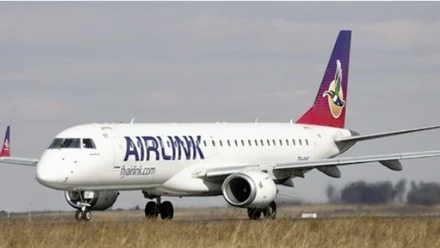
Aviation in Africa is experiencing record growth – with international seat capacity up 18.6% year-on-year in 2026.
Drawing on exclusive data from aviation analysts OAG alongside figures from International Air Transport Association (IATA) and UN Tourism, Africa in the Air highlights how increased airlift is directly fuelling tourism growth across the continent and creating significant opportunities for the travel trade, airlines, investors and governments.
In the first 10 months of 2026, 182.4 million departure seats have been scheduled across Africa – a 13.7% increase on 2025. International capacity is driving this surge, rising 18.6% year-on-year to 129.5 million seats, while domestic capacity has grown more modestly at 3.3%.
Key Points:
Five key markets are powering the expansion: Egypt; South Africa; Morocco; Ethiopia and Kenya
Morocco’s open skies agreement with the EU has enabled rapid expansion, while Egypt continues to attract substantial European LCC traffic. Meanwhile, South Africa’s winter sun appeal keeps European long-haul carriers committed
Eastern Africa is currently the fastest-growing sub-region
Seat capacity for Eastern Africa is up 24.3%, outperforming North and Southern Africa. This is fuelled by renewed confidence in the region and Ethiopia's hub ambitions
IATA data shows African passenger demand rose 9% in early 2025
This is more than double the global figure – with long-term forecasts predicting annual passenger growth of 3.7%, reaching 345 million passengers per annum by 2043.
Key Source Markets
Western Europe and the Middle East lead in terms of flight capacity while both North and South America offer untapped potential
Infrastructure Investment is Transforming the Landscape
There has been a decade of major airport infrastructure development that is reshaping connectivity across Africa with the Zaha Hadid Architecturally designed Bishoftu International Airport, Ethiopia set to open in 2030 with a capacity goal eventually rising to 110 million passengers. Angola's new Agostinho Neto International Airport with capacity for 15 million passengers is an new emerging hub. Upgrades in Morocco, Rwanda and South Africa signal a continent-wide commitment to capacity expansion, modernisation and improved passenger experience.
Aviation Reform Still Required
High taxation, infrastructure bottlenecks in some markets, limited progress on pan-African open skies implementation and complex visa regimes are still holding growth back but can be mitigated with coordinated action between governments, airlines and tourism stakeholders.