World Rhino Day: The Conservation Story Behind a Rhino Many Travellers Remember
Some wildlife stories stay with people long after an encounter ends. Gertjie's is one of them.
For many who followed Africam's live cameras, he remains Little G, the young rhino calf whose early life captured the attention of viewers around the world. Today, he is a grown bull, and his journey from rescue to freedom offers a perspective on the long-term commitment behind wildlife rehabilitation.
This World Rhino Day, Jabulani Safari revisits Gertjie's story in partnership with Africam, reflecting on the people, care and conservation efforts that helped shape his life.
A Life That Began with Loss
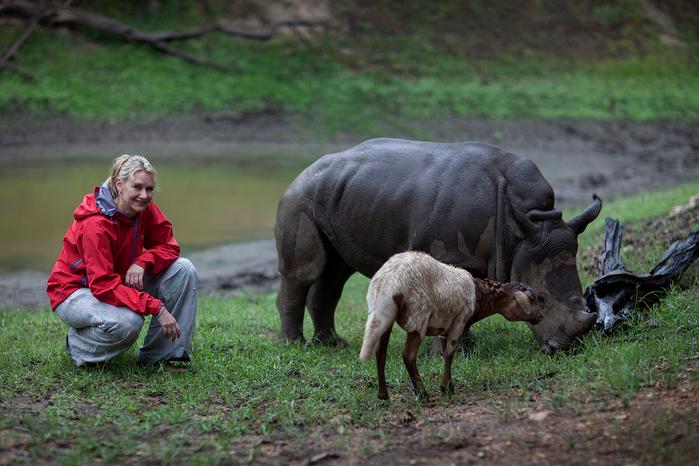
In May 2014, Gertjie was found beside his mother's body after poachers killed her. At just three months old, he was brought to the Hoedspruit Endangered Species Centre (HESC), where he began his recovery.
His early years formed part of Adine Roode's work with rhino orphans. Before founding and developing HERD, the Hoedspruit Elephant Rehabilitation and Development organisation, Adine dedicated years to the rehabilitation of orphaned rhinos at HESC.
Gertjie developed a close bond with Adine during his early care. She remembers him lying with his head on her lap, dancing his little dance and trusting completely.
Through Africam's live camera coverage, people far beyond South Africa became familiar with his story. Many viewers knew him as Little G, following his growth and forming a connection with a young animal they could observe from a distance.
His story demonstrates how digital platforms can extend the reach of conservation storytelling, allowing audiences to connect with individual animals and the people caring for them.
A Brotherhood Through Rehabilitation
Gertjie's journey continued alongside another orphaned white rhino, Matimba.
Rescued in November 2014, Matimba had suffered a similar loss. His mother was killed during a poaching attack while the two were reportedly enjoying a mud bath together.
Gertjie and Matimba were introduced in December that year. The two young rhinos became constant companions, supported by the rehabilitation team at HESC. Lammie, who would later become familiar to many through her association with HERD's elephant orphanage, was also part of their early companionship.
Their time together formed an important part of their rehabilitation journey, which continued through different stages of care and reintegration.
In July 2019, after five years of rehabilitation, Gertjie and Matimba were successfully released into the wild. An anti-poaching unit provided protection as the two rhino bulls transitioned towards life beyond the rehabilitation centre.
The release represented an important milestone. Rehabilitated rhinos that can successfully return to the wild have the opportunity to sustain themselves, establish natural behaviours and contribute to the future of their species through reproduction.
The work required to reach that point extends well beyond the initial rescue. It involves dedicated carers, veterinary professionals, rehabilitation teams and conservation partners working towards a shared outcome.
The People Behind the Rehabilitation
Gertjie's story is often remembered through the images and footage of a young rhino. Behind those images was a team responsible for his daily care, recovery and preparation for life in the wild.
Adine's involvement in rhino rehabilitation forms part of a wider conservation journey that continues through her work with HERD and the organisations connected to her career.
Her relationship with Gertjie has also endured.
Today, when their paths cross, Adine recalls that he still comes to greet her before they go their separate ways.
"To everyone who followed and loved him: he is still that Little G at heart, just in a much bigger body."
— Adine Roode
Her reflection speaks to the lasting relationships that can develop between people and animals during rehabilitation. It also offers a reminder that individual wildlife stories carry histories that may not be visible during a present-day encounter.
For guests who see Gertjie as a grown bull, there is a story behind the animal in front of them. For those who knew him through Africam, there is the added recognition of watching a familiar calf grow into adulthood.
Connecting Wildlife Conservation and Tourism
Responsible tourism can help create a deeper understanding of the landscapes and wildlife that travellers visit.
A safari encounter offers more than the opportunity to observe an animal. It can also introduce visitors to the conservation challenges affecting a species, the work undertaken to protect it and the people whose commitment supports that work.
At Jabulani Safari, wildlife and conservation form part of the broader guest experience. Our connection to the Greater Kruger landscape provides opportunities for visitors to encounter animals while learning about the conservation initiatives associated with the region.
Gertjie's story offers a different perspective on that connection. His journey began in a rehabilitation centre, continued through years of care and eventually led to his release into the wild.
His story also highlights the importance of responsible wildlife storytelling. Individual animals should not be defined only by the circumstances of their rescue. Their welfare, independence and ability to live as naturally as possible remain central to the purpose of rehabilitation.
For the travel industry, this distinction matters. Conservation storytelling can build awareness and encourage support, while responsible tourism can help connect visitors with the work taking place beyond the guest experience.
The Importance of Long-Term Conservation
Gertjie's journey spans more than a decade, from his rescue in 2014 to his release in 2019 and his life as a grown bull today.
That timeline illustrates how conservation outcomes develop over time.
The protection of rhinos requires ongoing commitment to habitat conservation, anti-poaching efforts, wildlife monitoring and the organisations working to safeguard populations. Rehabilitation serves a specific role for orphaned and injured animals, with the potential for release where their welfare and circumstances allow.
Gertjie and Matimba's release reflects the value of preparing animals for independence and providing protection as they transition into the wild.
Their story also forms part of the wider history of rhino conservation in the Greater Kruger region, where the protection of wildlife depends on collaboration between conservation organisations, land managers, veterinary teams and other partners.
From Little G to Gertjie
For those who followed Little G on Africam, seeing Gertjie today offers a connection between the young rhino they remember and the grown bull he has become.
For Adine, the bond formed during his early years remains.
"Love you, Gertjie, and thank you for letting our guests see you now as the beautiful bull you've become."
— Adine Roode
This World Rhino Day, Jabulani Safari and Africam share Gertjie's journey as a reminder of the work behind wildlife rehabilitation and the importance of continued conservation efforts.
His story began with tragedy, but it also reflects the possibilities created through care, collaboration and the opportunity to return to the wild.
From Little G to Gertjie, his story continues.