What Saruni Basecamp Can Teach Tourism About Impact Investment
Every remarkable travel experience depends on the things that operators can create. The landscape was there first, along with the wildlife routes, local cultural knowledge, and the communities that have lived alongside these ecosystems for generations.
Tourism, by its nature, packages these things into experiences guests can access. A guide interprets the landscape for guests, while a camp creates comfort within it. A team manages the many moving parts required to bring travellers into remote and extraordinary places. But the foundations of the experience remain larger than any tourism business itself. Saruni Basecamp operates across some of Kenya's most important community conservancies, including Mara North, Naboisho, Kalama and Sera, where conservation, community wellbeing and tourism are all interconnected.
Thinking Beyond "Giving Back"
"Giving back" has long been the language of responsible tourism, describing community projects, conservation contributions, fundraising initiatives or the percentage of revenue directed towards a cause. Many operators support important work through these efforts.
Saruni's approach aligns more with the concept of impact investment. They believe in making more than a financial contribution after the tourism experience has been created, but rather investing continuously in the people, ecosystems and local systems that make the experience possible in the first place.
For Saruni, responsible tourism shows up in decisions beyond policy. It shows up in who joins the team, where food and supplies come from, how camps use resources, where revenue flows and how the organisation measures its footprint. The end result is so much more than a sustainability programme sitting alongside the tourism operation. The investment runs through the operation itself.
When Local People Lead the Experience
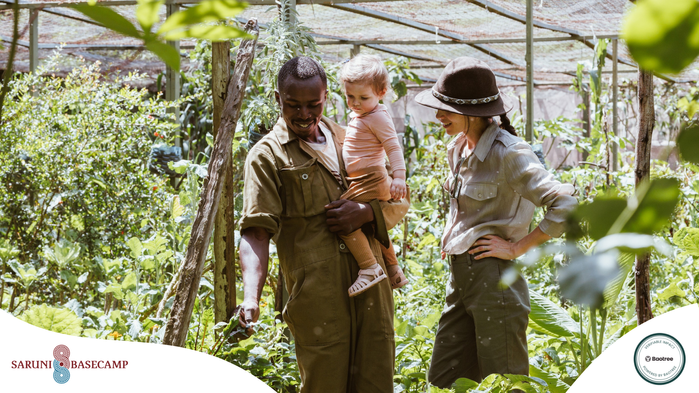
Saruni's teams are drawn predominantly from the communities surrounding its camps, including guides, managers, kitchen teams and housekeeping staff, the people most responsible for shaping what guests see, learn and remember. The people who understand these landscapes most deeply lead the guest experience. Local knowledge shapes how wildlife behaviour is interpreted, how cultural context is shared and how guests understand the relationship between communities and the natural environment.
Does community participation mean bringing local people into a tourism model that has already been designed, or does it mean creating space for local knowledge and leadership to shape the model itself? Saruni's example suggests the second creates a more meaningful experience for everyone involved.
Investing in the Systems Around the Camp
Saruni also works with local suppliers wherever possible and contributes directly to the conservancies in which it operates. Those conservancy fees fund anti-poaching activity, wildlife monitoring and community development programmes. In Sera, the business supports the only community-owned black rhino sanctuary in Kenya. In Kalama and Naboisho, its presence contributes to conservancies where wildlife populations have recovered over the years.
The wildlife guests travel to see depends on functioning habitats and effective conservation. The guest experience depends on guides, team members, and communities with a genuine stake in the tourism economy. And the long-term commercial strength of the operation depends on the continued health of the destination itself.
Investment Needs Accountability
Saruni reached a point many other operators will recognise. The team knew meaningful work was happening across its camps and conservancies, but it could not always communicate that work with the precision it deserved. Information existed in spreadsheets, individual camp reports and the knowledge of people closest to the work, and different teams sometimes collected it in different ways, making it difficult to compare performance or build one coherent picture across the operation. The gap was not between intention and action. It was between action and demonstrable evidence.
Through Baotree, a sustainability and impact management platform that helps tourism operators collect, centralise, analyse and report on their environmental and social impact data, Saruni has brought its sustainability and impact information together more consistently across multiple camps and conservancies. Now, the team can make decisions and communicate their impact based on available evidence that shows what is actually happening. Overlooked issues become harder to ignore and priorities can be set with greater confidence. Investments can also be adjusted according to what is producing results and where more attention is needed.
Saruni's annual Impact Report belongs to this same commitment, an accountability mechanism that shows guests, partners and communities where the organisation currently stands.
Saruni's Chief Operating Officer, Miriam Obegi says "Our partnership with Baotree allows us to move beyond good intentions by quantifying our impact with credible, measurable data. This strengthens transparency, informs better decisions, and ensures we deliver meaningful outcomes for nature, communities, and our business."
A Principle the Industry Could Adapt
Not every operator works inside a Kenyan community conservancy, and different landscapes bring different ecological pressures, community priorities, ownership structures and operating realities. However, Saruni's discipline behind their approach, and the willingness to measure impact honestly enough to see where it is falling short, not only where it is succeeding, can be replicated.
Saruni reminds us that the places that sustain tourism deserve more than appreciation, but rather long-term investment. Saruni Basecamp's story shows what that can look like in practice and reminds us to ask, "What makes your experience possible, and how are you investing in its future?"