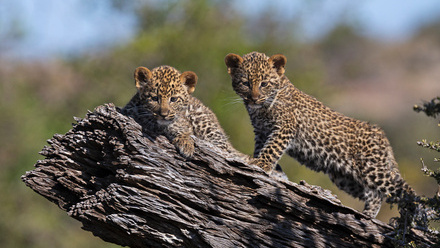
West African Leopard Population Shows Signs of Recovery in Benin's Pendjari National Park
A new study published in the journal Global Ecology and Conservation has found that leopard density in Benin's Pendjari National Park increased over a six-year period, rising from 0.62 to 2.08 leopards per 100 km² between 2017 and 2023. The findings offer a rare piece of encouraging news for West African leopards, which were listed as regionally endangered on the IUCN Red List in 2025 following a 50% population decline over two decades - with only an estimated 354 individuals remaining across the region. Researchers attribute the recovery in part to the conservation efforts of African Parks, which has managed the park in partnership with the Beninese government since 2017, maintaining a strong ranger presence, anti-poaching operations, habitat restoration, and community engagement programmes.
The results are particularly notable given the significant challenges facing the wider W-Arly-Pendjari (WAP) Complex, a 27,000 km² transboundary World Heritage Site spanning Benin, Burkina Faso and Niger, which has been increasingly infiltrated by non-state armed groups operating in the Sahel over the past decade. Surveys in other sectors of the complex have been far less encouraging, with leopards failing to be detected in parts of the WAP National Park in 2021, and heavy overgrazing reported in the Niger and Burkina Faso sectors. Study lead author Marine Drouilly of Panthera noted that Pendjari's persisting leopard population remains critical to any future recolonisation of the broader landscape - "if at some point we manage to secure the full area, then animals will be able to expand again."
Source: News Mongabay