Why Southern Africa's Birding Boom Should Be on Every Traveller's Radar
As interest in birdwatching continues to grow, a new generation of travellers is discovering that some of the world's most rewarding wildlife encounters can happen through binoculars, not only through a camera lens.
Recent research from the Royal Society for the Protection of Birds (RSPB), highlighted by Tourism Update, found that participation in birdwatching in the UK has increased by 47% over the past eight years, suggesting that more than four million UK citizens now enjoy observing birds in their natural habitats.
The appeal extends beyond specialist birders. Smartphone identification apps, digital field guides and bird photography have made birdwatching increasingly accessible to newcomers, while travellers are seeking more immersive experiences that connect wildlife, landscapes and conservation. BirdLife South Africa also reports growing interest in longer itineraries that combine different habitats and birding hotspots rather than focusing on a single destination.
For Southern Africa, this presents a natural fit. The region's combination of diverse habitats, wildlife, established tourism infrastructure and specialist guiding creates opportunities to build birding into a broader travel experience — from traditional safari landscapes to wetlands, forests and coastal ecosystems.
From Wilderness to Coast
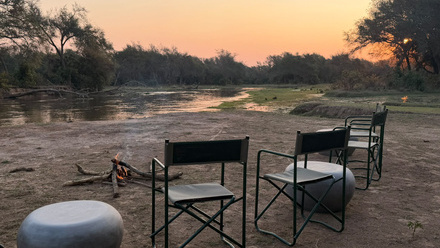
Botswana's Northern Tuli region illustrates the diversity of birding available in the southern African bush.
Within Mashatu Game Reserve, more than 350 bird species have been recorded across a landscape of open plains, riverine areas, rocky outcrops and woodland. The variety of habitats means birding can form part of a traditional safari experience, with sightings ranging from large raptors to colourful bee-eaters, kingfishers and waterbirds.
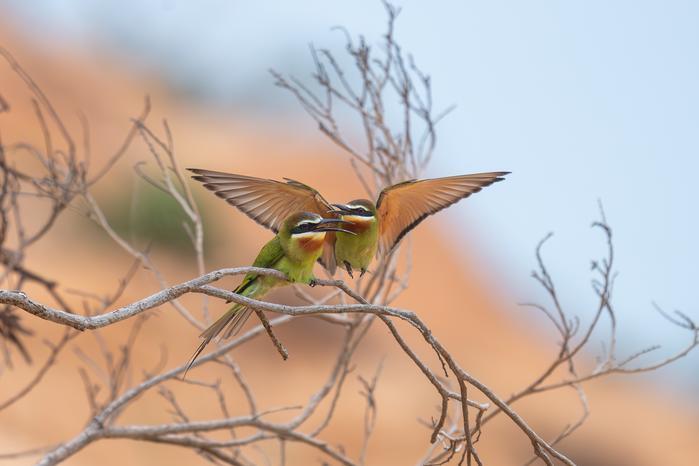
Martial Eagles, Bateleurs and African Hawk-Eagles can be seen soaring above the landscape, while Lilac-breasted Rollers, Southern Carmine Bee-eaters and White-fronted Bee-eaters provide some of the more colourful sightings. Along the Limpopo and Majale river systems, African Fish Eagles, kingfishers, herons and storks are among the species associated with the waterways.
For birders with a particular species in mind, the diversity can also extend beyond the more familiar safari birds. Kori Bustards — Botswana's national bird and the world's heaviest flying bird — are among the species found in the region, alongside queleas, owls and a wide range of other resident and migratory birds.
Birding here does not necessarily require a dedicated birding itinerary. A game drive can just as easily become an opportunity to identify a new species, listen for a distinctive call or stop to watch a raptor circling overhead.
A Different Perspective on the Coast
Further east, the coastal ecosystems of Mozambique offer a distinctly different birding environment.
At Pambele Beach House, on Mozambique's San Sebastian Peninsula overlooking the Bazaruto Archipelago, wetlands, coastal vegetation and beaches create habitats for a variety of waterbirds and coastal species. More than 350 bird species have been recorded in the wider area.
Yellow-billed Storks, Pink-backed Pelicans and Greater Flamingos can be encountered around nearby wetlands, while Little and Olive Bee-eaters add colour among the coastal vegetation. Yellow-billed Egrets, Little Egrets and other waterbirds are also associated with the area's coastal and wetland habitats.
The experience differs from traditional safari birding. Rather than viewing birds exclusively from a vehicle, visitors can encounter them while walking, exploring the shoreline or spending time on the water. The result is a different way of experiencing the surrounding ecosystem, where birdlife becomes part of the wider coastal landscape.
Birding as Part of a Wider Travel Experience
Birdwatching does not have to exist separately from other forms of tourism. This is one of Southern Africa's particular strengths. Birding can be combined with wildlife safaris, photography, hiking, cultural experiences and coastal tourism, creating itineraries that appeal to travellers with a range of interests.
The growing accessibility of birdwatching is likely to broaden that appeal further. Technology has made it easier for newcomers to identify species, record sightings and learn about bird behaviour, while the rise of wildlife photography and nature-focused travel has encouraged travellers to look beyond the traditional safari checklist.
For destinations, this also creates an opportunity to present birdlife as an integral part of the travel experience rather than simply an additional attraction.
From Bush to Beach
The combination of Mashatu Game Reserve in Botswana and Pambele Beach House in Mozambique provides one example of how these contrasting environments can form part of a single Southern African journey.
Together, the two destinations demonstrate how varied Southern Africa's birding experiences can be — and why travellers do not necessarily need to consider birdwatching a specialist pursuit.
Whether an experienced birder looking to add new species to a life list, a photographer searching for new subjects, or a traveller simply wanting to pay closer attention to the natural world, birds can offer another reason to explore regions.
As international interest in birdwatching grows, Mashatu and Pambele (part of the Kaelo Destinations collection) invite travellers to experience landscapes at a slower, more observant pace.