World Elephant Day: A year of change and renewed purpose at Jabulani Safari’s conservation partner, HERD
Hoedspruit, South Africa
As World Elephant Day is marked on 12 August, Jabulani Safari reflects on a year of profound change at its conservation partner, HERD (Hoedspruit Elephant Rehabilitation and Development), and the lessons that have emerged from living and working alongside one of Africa’s most extraordinary species.
For Jabulani, conservation has never been separate from the safari experience. It is part of the responsibility of operating in a landscape where wildlife, people and tourism exist alongside one another.
HERD represents an important part of that responsibility.
Founded to provide a safe environment for orphaned elephants to heal, grow and develop natural social bonds, HERD has become an important part of Jabulani’s conservation story. Over the past year, that story has entered a new and deeply reflective chapter.
A new chapter of research.
One of the most significant developments has been the creation of the Shambira Research Centre, which marks an important new chapter in HERD’s work.
The research centre will strengthen HERD’s ability to contribute to elephant welfare research locally, creating greater capacity to study and better understand the physical and behavioural wellbeing of elephants in human care. Among its areas of focus will be the study of stress hormones through elephant dung analysis, providing researchers with valuable insights into elephant wellbeing and helping build a growing body of knowledge around the rehabilitation and care of orphaned elephants.
Looking ahead, the centre has the potential to become an important space for research, collaboration and learning, helping HERD turn the knowledge gathered through its work into practical improvements in elephant care and welfare.
Beyond the elephants
The past year has also reinforced just how much conservation depends on people.
HERD’s carers, researchers, rangers, veterinary teams and wider support network work behind the scenes every day to ensure that the elephants receive the care and protection they need.
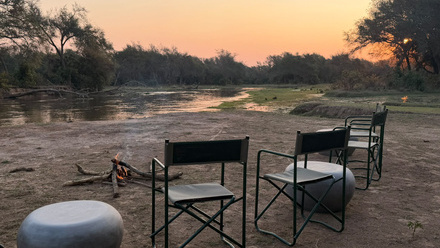
Their work is rarely visible to a guest sitting around a fire at Jabulani or watching elephants move through the reserve. Yet it is this network of people, working with patience, knowledge and dedication, that makes meaningful conservation possible.
Through its relationship with HERD, Jabulani has the opportunity to connect guests with this larger story.
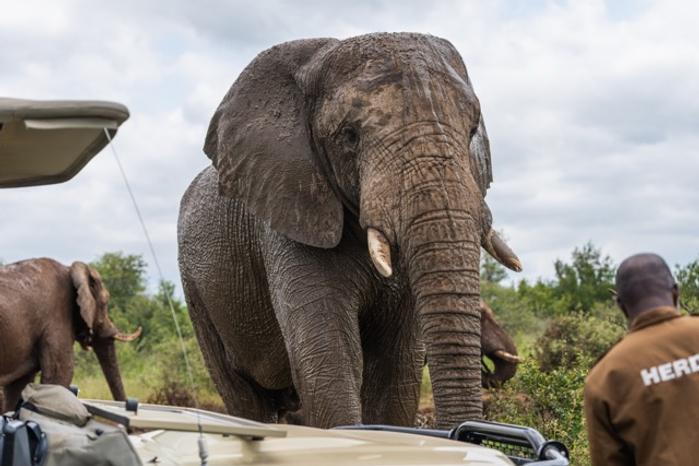
An encounter with an elephant is not simply a memorable safari moment. It can also be an opportunity to understand an animal as an individual, to learn about its history and relationships, and to recognise the care and commitment required to give orphaned elephants the opportunity to heal, grow and thrive.
This sits at the heart of Jabulani’s approach to responsible safari.
Creating meaningful experiences should go hand in hand with supporting the conservation work that makes those experiences possible.
Looking ahead
World Elephant Day provides an opportunity to celebrate elephants, but also to acknowledge the complexity of protecting them.
The past year at HERD has shown that conservation is not a linear journey. It involves progress and setbacks, discovery and uncertainty, and sometimes profound loss.
It also requires the willingness to listen, to learn and to keep moving forward.
As Jabulani Safari’s conservation partner, HERD continues to evolve its approach to elephant welfare, research and rehabilitation. For Jabulani, supporting that journey is part of a long-term commitment to ensuring that tourism can contribute meaningfully to the protection and understanding of wildlife.
This World Elephant Day, Jabulani celebrates not only the elephants at the heart of HERD, but the people who care for them, the researchers working to understand them and the conservation efforts helping shape their future.
Because protecting elephants is about more than preserving a species.
It is about understanding individual animals, respecting their needs and continuing to learn how we can do better.