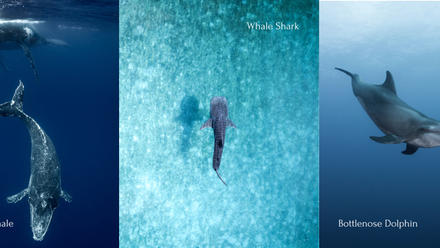
St Helena Highlights Annual Whale Shark Season as Nature-Led Travel Continues to Rise
New research from Kayak’s What the Future Report 2026 reveals a key shift in traveller behaviour with holidays increasingly being built around natural phenomena - from aurora displays and solar eclipses to seasonal wildlife events. According to the report, 55% of Gen Z and Millennial travellers say natural wonders will guide their travel plans in 2026.
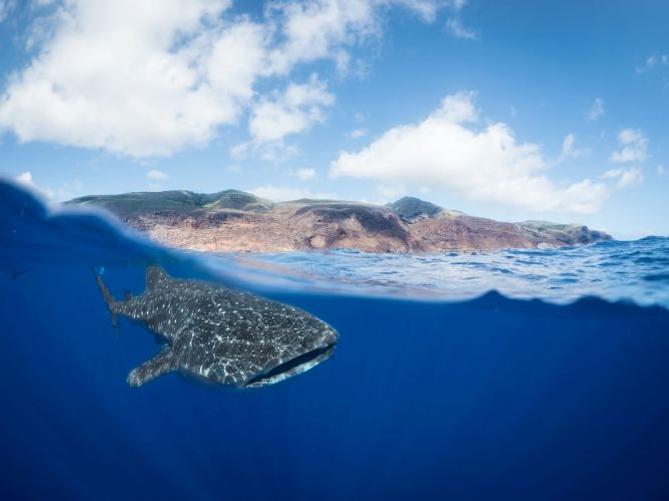
For adventurous travellers, a remarkable wildlife event takes place every year on St Helena, where the endangered Whale Shark, known locally as the “Bone Shark”, returns to the island’s warm, crystal-clear waters each year from January to April.
Growing up to 10 metres long and weighing as much as 20 tonnes, the world’s largest fish gathers around the remote South Atlantic island in what is considered one of the most significant seasonal Whale Shark events anywhere on Earth, making now the ideal time to start planning for the 2027 season.
Classified as endangered, with some thought to live up to 150 years, Whale Sharks are believed to visit St Helena to breed. The island consistently records near-equal numbers of males and females, including pregnant females in early stages.
Despite their size, Whale Sharks are harmless to humans. Although their mouth can stretch to four feet wide, a whale shark’s teeth are so tiny that they can only eat small shrimp, fish and plankton by using their gill rakers as a suction filter.
Encounters on St Helena are strictly managed to ensure responsible, low-impact swimming experiences that prioritise conservation and animal welfare, offering rare, close-up interactions in a carefully protected environment.
Visitors can book guided Whale Shark snorkelling excursions and wider marine experiences with the island's locally accredited operators, Dive St Helena, Sub-Tropic Adventures, Wicked Wahoo, Enchanted Isle and Seahawk Odyssey, with experiences available throughout the Whale Shark season.
Visitors consistently describe the experience as life changing. One reflected: “I was alongside the Whale Sharks for over half an hour. It was an experience that will never leave me.” Another added: “St Helena has become my favourite place to encounter these gentle giants. Nowhere else have I seen so many large adult sharks in such a small area.”
For travel and adventure audiences seeking authentic, bucket-list wildlife encounters, far from the crowds, this is a natural phenomenon worth planning for now.
St Helena is accessible via weekly flights from Johannesburg, with seasonal services from Cape Town.
https://www.nationalworld.com/must-read/brits-are-setting-their-alarms-for-nature-in-2026-5613952
https://www.wwf.org.uk/learn/fascinating-facts/whale-sharks
About St Helena Island
St Helena is one of the world’s most remote inhabited islands, located in the South Atlantic Ocean between Africa and South America. A British territory since 1659 (with a brief Dutch interval), the island retains remarkable heritage from its East India Company era, particularly in the historic capital, Jamestown. At just 47 square miles, with a small population and unspoilt landscapes, St Helena offers visitors tranquillity, natural beauty and a sense of discovery. The island is accessible via weekly flights from Johannesburg, with seasonal services from Cape Town.
For more information on St Helena visit: https://sthelenatourism.com/