Save the Rhino Trust (SRT) and Ultimate.Earth, Strengthen Protection Of Red Mountain Rhino Population
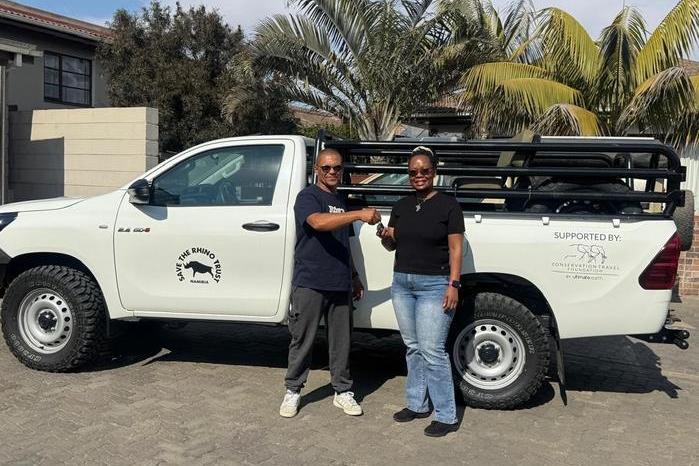
Joint investment provides new patrol vehicle and strengthens community-led conservation in the Red Mountain Joint Management Area
Save the Rhino Trust (SRT) and ultimate.earth (previously Ultimate Safaris) have strengthened a partnership spanning more than two decades with a joint investment in the protection of the Red Mountain Joint Management Area (JMA), an important stronghold for Namibia’s free-roaming, desert-adapted black rhino.
SRT has contributed N$280,000 generated from the sale of old vehicles, while ultimate.earth, through its Conservation Travel Foundation (CTF), has contributed approximately N$330,000 towards the purchase of a dedicated patrol vehicle for the area. The two organisations will jointly cover the vehicle’s ongoing running costs, while SRT will provide the driver.
The devastating poaching of Dorsland, a pregnant female rhino and her calf in October 2025 highlighted the continuing vulnerability of this important rhino population, and this new vehicle will allow for increased patrol capacity and the strengthening of anti-poaching and monitoring efforts across the vast and rugged JMA.
The Red Mountain JMA is jointly managed by the Sorris Sorris, Uibasen Twyfelfontein and Doro !Nawas Conservancies and is home to among the furthest-south population of free-roaming desert-adapted black rhino in Namibia. The new vehicle will complement the conservancies’ own conservation efforts, including the access-control points that they own and manage, creating a stronger, community-led network of protection across the landscape.
Conservation creating a future
The importance of protecting the Red Mountain landscape extends well beyond the survival of its rhino. Over decades, Namibia’s community-based conservation model has demonstrated that when communities are given rights, responsibilities, and tangible benefits from wildlife and natural resources, conservation can become a driver of economic development. In the north-west, conservation by conservancies has created the conditions for tourism to develop in areas that previously had very few economic opportunities. Tourism has in turn created jobs, businesses, infrastructure, skills, cash generation for conservancies, and livelihoods for community members — helping to create a sustainable, generational future in which conservation has real value to the people living alongside wildlife.
The Red Mountain JMA is part of this broader success story. Protecting the wildlife and landscape helps protect the tourism economy that conservation makes possible, while tourism provides an economic incentive for communities to continue protecting their natural resources.
For SRT CEO Simson Uri-Khob, this connection between conservation, communities and responsible tourism is fundamental.
“Our partnership with ultimate.earth has now been going for more than 20 years, and what we value is that they understand conservation as a responsibility, not simply as something that happens somewhere else.”
“They recognise that tourism in Namibia depends on healthy landscapes, wildlife and communities. Their willingness to invest not only in the vehicle but also in its ongoing operation demonstrates a genuine long-term commitment to conservation and to the communities that are protecting these areas.”
Uri-Khob said the loss of Dorsland and her calf was a stark reminder of the importance of maintaining a strong conservation presence.
“Every rhino is important, but the loss of a pregnant female and her calf was particularly devastating. We need to respond by increasing our presence on the ground and strengthening the capacity of the conservancies and their partners to protect this population.”
A shared responsibility
For ultimate.earth Managing Director Tristan Cowley, the investment reflects the company’s belief that tourism operators have a responsibility to contribute directly to the protection of the landscapes on which their businesses depend.
“As a Namibian tourism company, we believe our responsibility goes far beyond taking guests into these incredible landscapes. We benefit from conservation, so we have a responsibility to invest back into it.”
“What has happened through Namibia’s conservancies is remarkable. Communities have protected wildlife, wildlife has made tourism possible, and tourism has created jobs, businesses and opportunities where there were previously very few. That creates something much bigger than a safari — it creates the possibility of a sustainable future for the next generation. Sustainable national development!”
Cowley said the latest investment was deliberately structured as a long-term operational partnership.
“The vehicle is important, but the commitment behind it is even more important. SRT provides the driver, we share the running costs, and together we are putting more boots and wheels on the ground. Following the loss of Dorsland and her calf, we felt that doing nothing was simply not an option.”
He said the role of the three conservancies was equally important.
“Sorris Sorris, Uibasen Twyfelfontein and Doro !Nawas are not passive beneficiaries of conservation. They are the custodians of this landscape. Their access-control points, their people and their commitment are an essential part of protecting the rhino.”
The partnership between SRT, ultimate.earth and the three conservancies demonstrates the increasingly important role that conservation organisations, communities, and tourism operators can play together in protecting Namibia’s natural heritage while creating economic opportunity from it.
Ultimately, the objective is not simply to protect rhino from poaching. It is to ensure that wildlife, conservation, and the communities who live alongside them can continue to thrive together for generations to come by creating meaningful sustainable livelihoods.