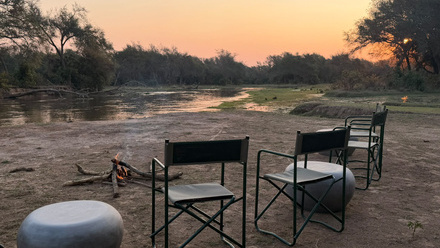
Nkasa Linyanti: Experience a Wildlife Renaissance in Namibia’s Linyanti Wetlands - OPENING MAY 2026
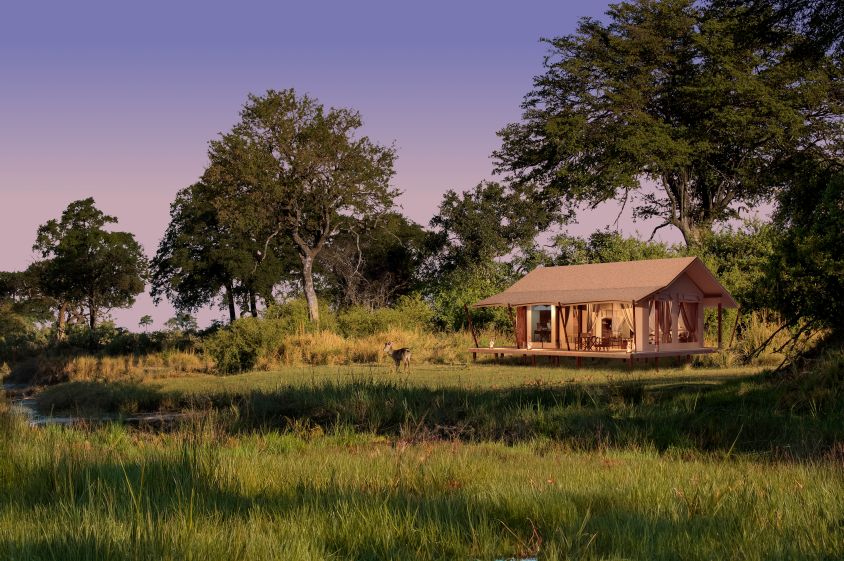
Just as the Delta has its wild secrets, Namibia has its wetlands — wilder, quieter, and more crucial to regional ecology than most travellers realise. Hidden in the southern wedge of the Zambezi Region, the Linyanti wetlands unfold where the Linyanti and Kwando Rivers braid through reedbeds and floodplains, and it is here that a powerful conservation story is taking shape.
At its centre sits Nkasa Linyanti, our newest under-canvas camp — opening May 2026 — and the only camp on permanent Nkasa Island within the 30,000-hectare Nkasa Rupara National Park.
A Camp Rooted In Conservation
Bordered by the Linyanti and Kwando Rivers, Nkasa Rupara National Park is a true wetland sanctuary — a place of abundant water, shifting habitats and remarkable biodiversity. Seasonal floods create a rich mosaic of reed-lined channels, floodplains, wooded islands and open savannah, supporting exceptional concentrations of wildlife. These dynamic conditions make the park both a refuge for endangered species and a crucial breeding ground for elephants, buffalo, and rare wetland specialists.
Entirely unfenced, the park forms part of a vital wildlife corridor linking Botswana, Angola, Zambia and Namibia, and sits within the Kavango–Zambezi Transfrontier Conservation Area (KAZA). This open landscape allows wildlife to move freely across borders, reinforcing Nkasa Rupara’s role as one of southern Africa’s most important ecological corridors within the world’s largest cross-border conservation landscapes.
Every stay at Nkasa Linyanti directly supports the conservation of Nkasa Rupara National Park. This is regenerative tourism in action — travel that leaves the wildlife and surrounding communities stronger. It is more than just another safari camp. It is a bold conservation commitment from Natural Selection and conservationists Chantelle and Brent Cook, partners who bring decades of experience in safeguarding fragile ecosystems across Southern Africa.
“Nkasa Linyanti is first and foremost a conservation project. Historically, this area experienced pressure from poaching, but the establishment of the camp and the presence of conservation and monitoring teams have significantly reduced that threat. We are now recording a measurable recovery in wildlife, including increased numbers of lion and elephant bulls and more relaxed elephant breeding herds — clear indicators of an ecosystem returning to stability.”- Brent Cook
The Wildlife & The Water
The landscape here, framed by open savannah, feels like the Okavango Delta — the tree islands, the papyrus-lined channels, the big sky mirrored in the water — but with a tiny fraction of the safari visitors. From April to October each year, the floodwaters arrive from Angola, breathing life into the plains and transforming the park into a vast wetland alive with hippo, red lechwe and the elusive sitatunga. From November to March, after the rains, the savannah erupts in colour and more than 430 bird species descend on the wetlands — Namibia’s most productive birding hotspot.
Throughout the year, the park is a stage for extraordinary movement: vast buffalo herds sweeping across the floodplains, elephants following ancient migration routes, and predators — lion, leopard, hyena — who move silently along the edge of it all. It’s wild and it’s intimate.
With so few safari visitors here at any one time, sightings are often strikingly private. Day and night drives, guided walks, mokoro excursions, boat trips and cultural visits reveal every dimension of this ever-changing landscape.
How To Get To Nkasa Linyanti
Guests can access Nkasa Linyanti by air or road (including self-drives), with the most common routes via Katima Mulilo (Namibia), Kasane (Botswana), or Victoria Falls (Zimbabwe).
Scheduled flights operate between Windhoek and Katima Mulilo, while private charters and a combination of road plus helicopter transfers are available from operators in Namibia and Botswana. For those travelling overland, the journey is scenic and well-coordinated. Guests are transferred to Sangwali, the end of the tar road, where they are met by a Nkasa Linyanti guide for a complimentary transfer and game drive through the park into camp.
Driving Routes, Transfer Times and Flight Options Have Been Uploaded to the Agent Zone.
Where The Rivers Meet, A Vital Elephant Corridor Continues
In May this year we are not just opening a camp, but together with our guests, we are helping to support the continued resurgence of wildlife in this critical conservation area — and the protection of an important elephant corridor linking Angola, Namibia and Botswana.